
The Reason “Always On My Mind” Still Cuts Deep for Willie Nelson
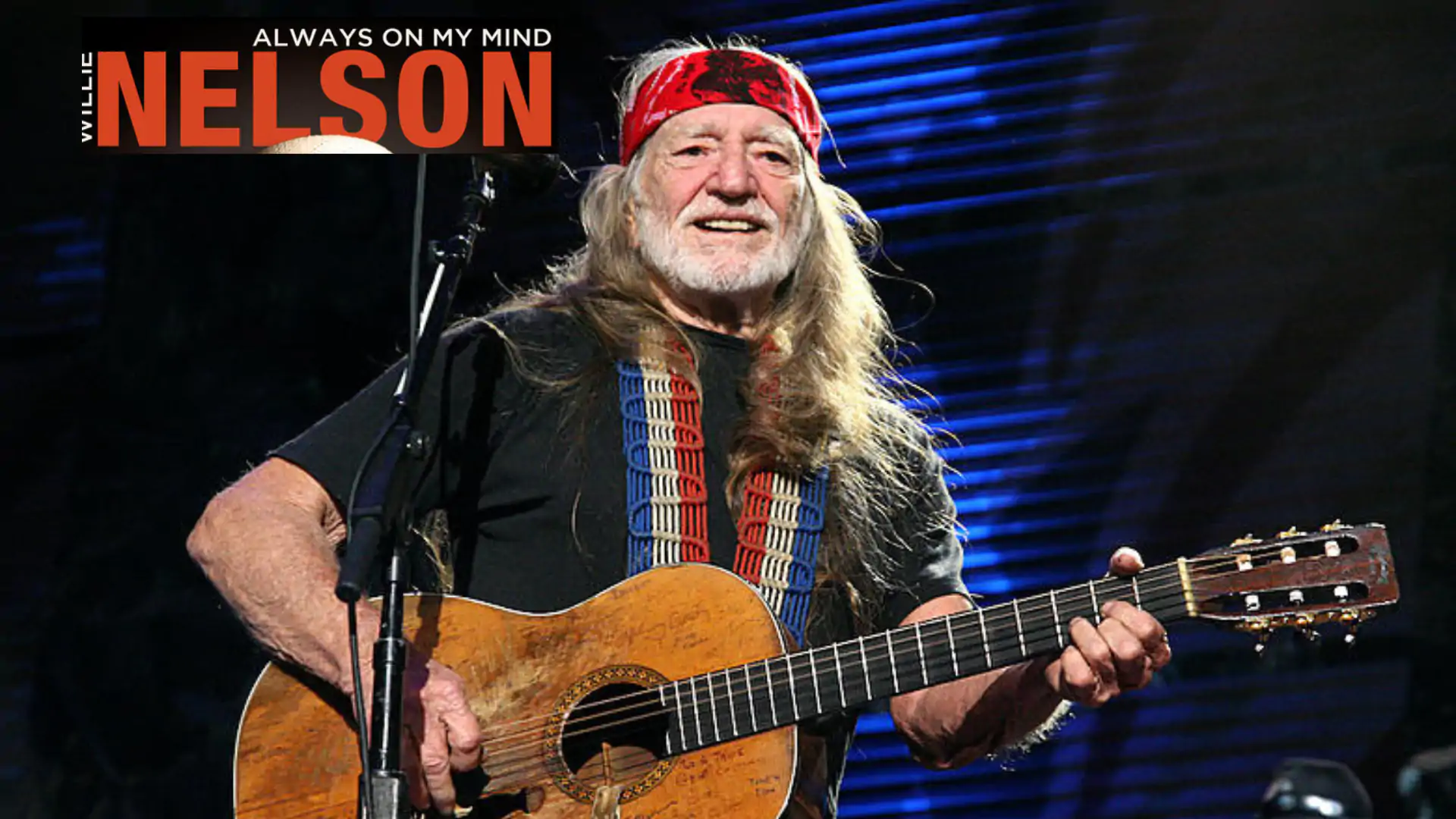
Willie Nelson “Always On My Mind”
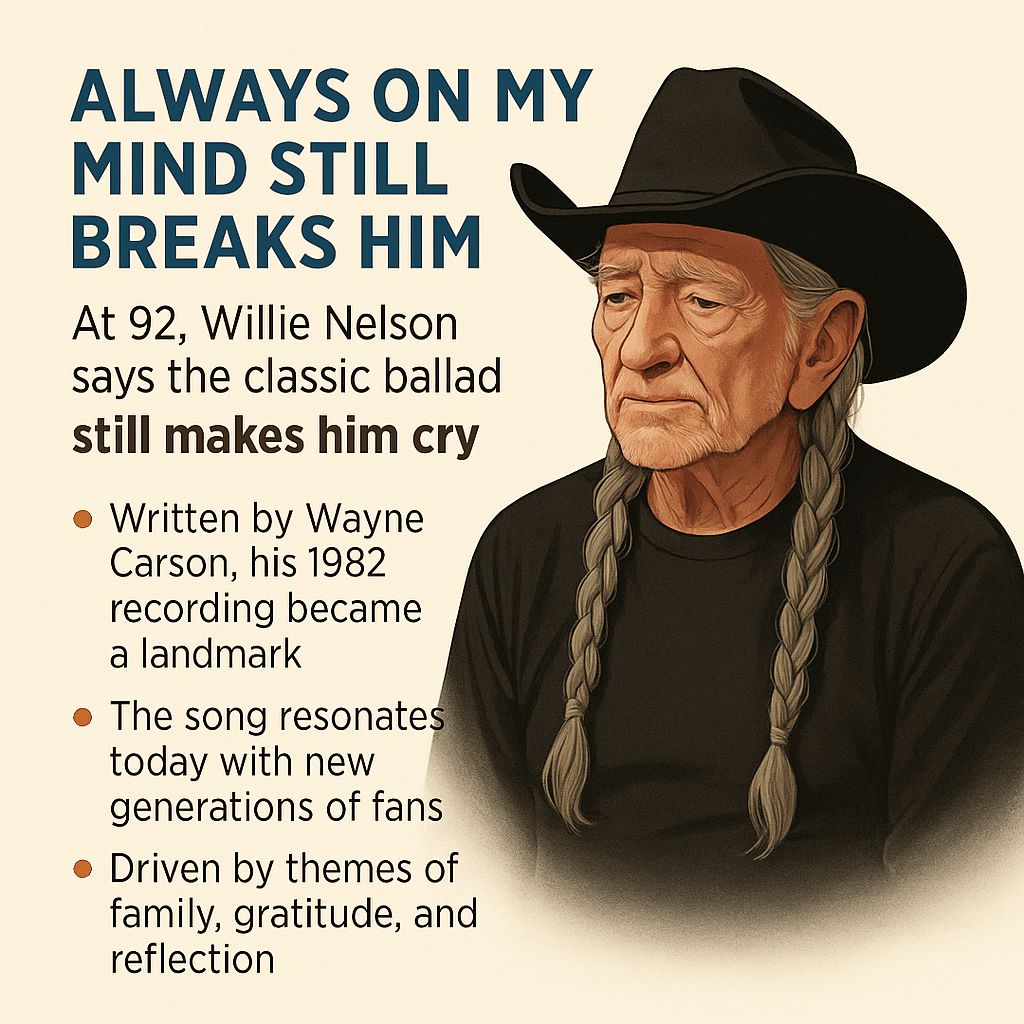
- 1 At 92, Willie Nelson says “Always On My Mind” still makes him cry. The song feels heavier with age.
- 2 Written by Wayne Carson and recorded by Elvis first, Willie’s 1982 version became a landmark in the American songwriting canon.
- 3 In 2025, the ballad has new relevance through the Outlaw Music Festival, rising TikTok discovery, and Grammy-season attention.
- 4 Fans and critics say the song now reflects Willie’s late-life focus on family, gratitude, and reflection—especially in moments shared with Lukas Nelson.
Willie Nelson has never been one to hide from emotion. Even now, at 92, with a lifetime of miles behind him, he still finds himself disarmed by the quiet power of “Always On My Mind.” Friends say that when the song comes up backstage—sometimes during warm-ups, sometimes when he’s alone with a guitar—his voice softens.
He will hum the first line, pause, and shake his head as if remembering something only he can see. The song carries a weight that age hasn’t dulled. If anything, it’s grown heavier, more intimate, more revealing.
In a recent conversation that spread quickly across social media and music press, Willie admitted that the song still makes him cry. He didn’t say it dramatically. It was more of a gentle acknowledgment, almost matter-of-fact, that certain stories in life keep unfolding long after the people in them are gone.
The admission struck a nerve—fans reposted it across TikTok and Instagram, critics wrote short reflections, and younger listeners who knew the track only through playlists and movie soundtracks suddenly heard it with fresh ears.
And it matters now in a way that speaks directly to 2025. Willie is entering another Grammy season with renewed attention, thanks to the continued reverence for Oh What a Beautiful World and the cross-generational discovery of his catalog through everything from Outlaw Music Festival Tour videos to viral clips of him harmonizing with Lukas Nelson on old standards.
Despite a scaled-back schedule and careful health management, he remains a steady presence across the Americana landscape—quietly rewriting what late-career artistry can look like.
“Always On My Mind” sits at the center of that story. Its endurance is almost mythological at this point, a song that didn’t just survive the decades but deepened with each one. Before it became Willie’s signature, it belonged to Wayne Carson, who wrote it with Mark James and Johnny Christopher.
Elvis Presley helped lift it into circulation in 1972, giving it the bruised yearning of a man sifting through regret in real time. Then came Willie’s 1982 recording—sparser, more vulnerable, unmistakably his. It topped charts, swept the Grammys, and permanently entered the American songwriting canon. Yet Willie never treated it like a trophy piece. He treated it like a confession.
Industry historians often say the power of Willie’s version comes from the way he withholds and releases emotion, almost like he’s stepping around memories instead of walking straight through them.
Producers in Nashville recall how his phrasing—which floated behind the beat—made the heartbreak feel unscripted. Grammy voters, looking back, often point to the recording as a bridge between classic Nashville craftsmanship and the more introspective singer-songwriter tradition that Americana later embraced.
But the emotional intensity of the song today isn’t only about its legacy. It’s about how artists in their later years interact with their own work. Music psychologists note that as performers age, songs become sharper mirrors. Regret, gratitude, forgiveness—these aren’t abstract ideas for someone in their nineties. They’re lived, catalogued, and understood. When Willie sings “Maybe I didn’t love you,” it no longer sounds like the doubt of a younger man. It sounds like a lifetime being weighed with startling honesty.
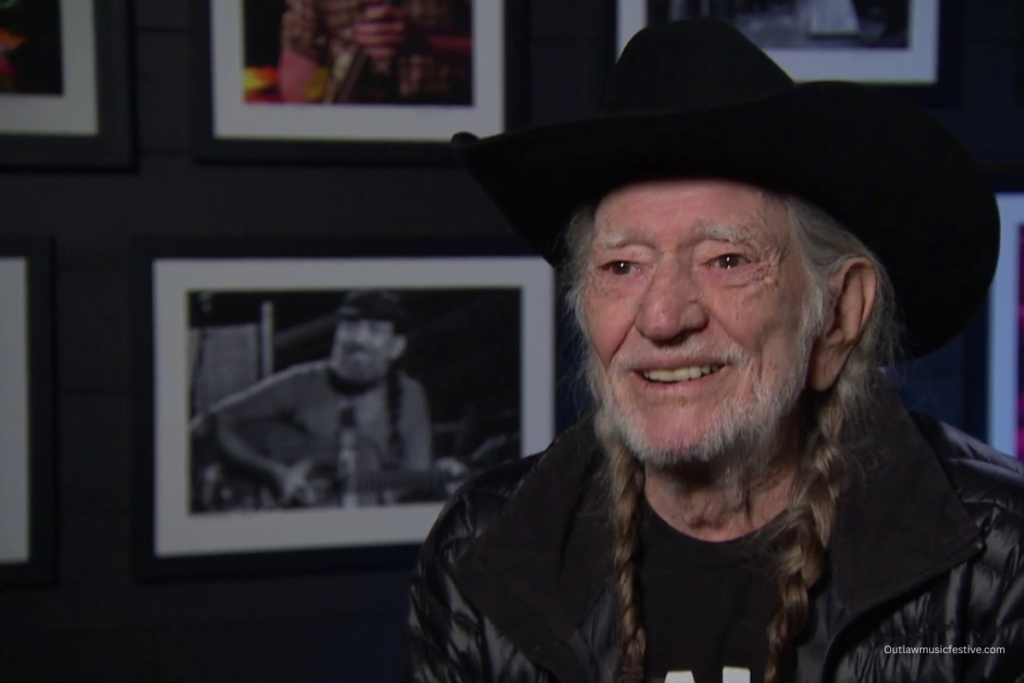
There’s also the physical reality of singing at 92. Willie has spoken in recent interviews about pacing himself, choosing when to push his voice and when to let it settle. Observers who’ve followed him on the road through recent Outlaw Festival dates say he seems most energized when performing the quieter material—“Angel Flying Too Close to the Ground,” “Honeysuckle Rose,” and, of course, “Always On My Mind.”
These songs allow him to sit inside the melody instead of powering through it. And when he performs them with Lukas by his side, there’s an almost ceremonial quality to the moment: a father handing down emotional architecture to a son who understands both the music and the man.
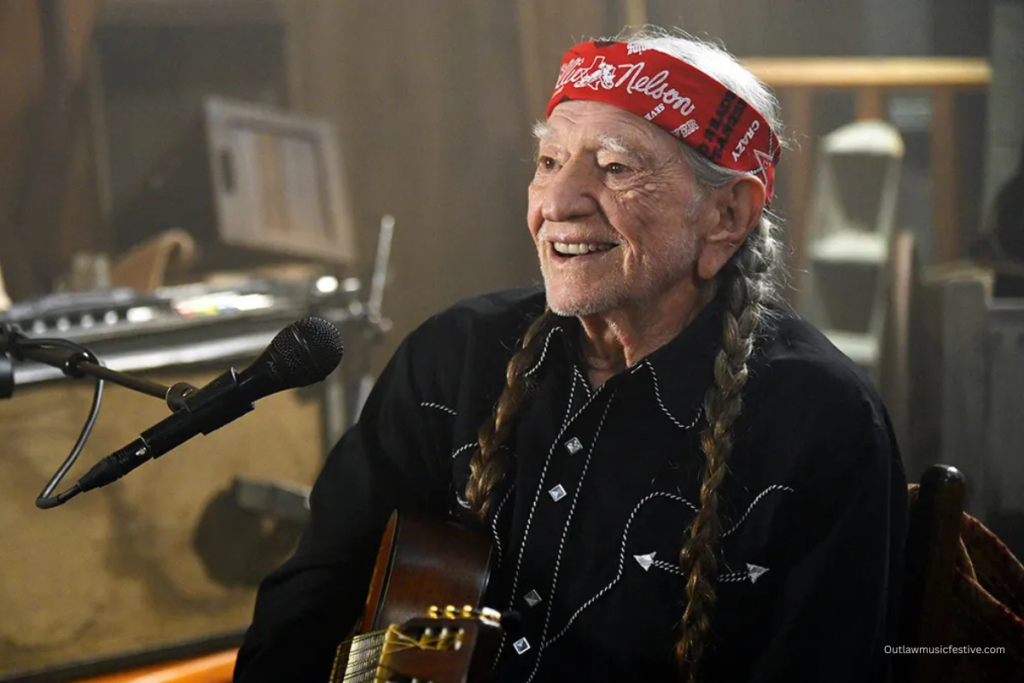
Outlaw Music Festival audiences feel that shift immediately. The show might begin with rowdy, good-time energy—especially on nights featuring Bob Dylan or other long-time friends—but when the opening chords of “Always On My Mind” bloom through the PA, the atmosphere tightens.
Younger fans, many of whom discovered Willie through TikTok edits or playlist algorithms, suddenly recognize the song’s gravity. Older fans lean in like they’re hearing a familiar story told with a new detail they somehow missed before. It’s one of the rare moments on any festival bill where three generations fall silent at once.

Music critics across Billboard, Rolling Stone, and Texas Monthly have noted this effect repeatedly over the last year: Willie’s voice, softened but luminous, brings a new shade to songs that already felt complete. Americana writers often describe late-career performances as “revisions,” but Willie doesn’t revise. He reveals. And “Always On My Mind” is the closest thing he has to a spiritual autobiography—one that charts fault, forgiveness, and the desire to be better, even in hindsight.
Producers in Nashville who’ve worked with legacy artists say this phenomenon is rare. Most performers find their big hits becoming technical obligations as they age—crowd-pleasers rather than emotional centers. But Willie has done the opposite. He has let the song age with him. He’s carried it the way one carries a memory that refuses to settle, and listeners hear that. They hear a man who’s lived every angle of love: romantic, paternal, familial, communal. They hear someone who has lost and healed and lost again.
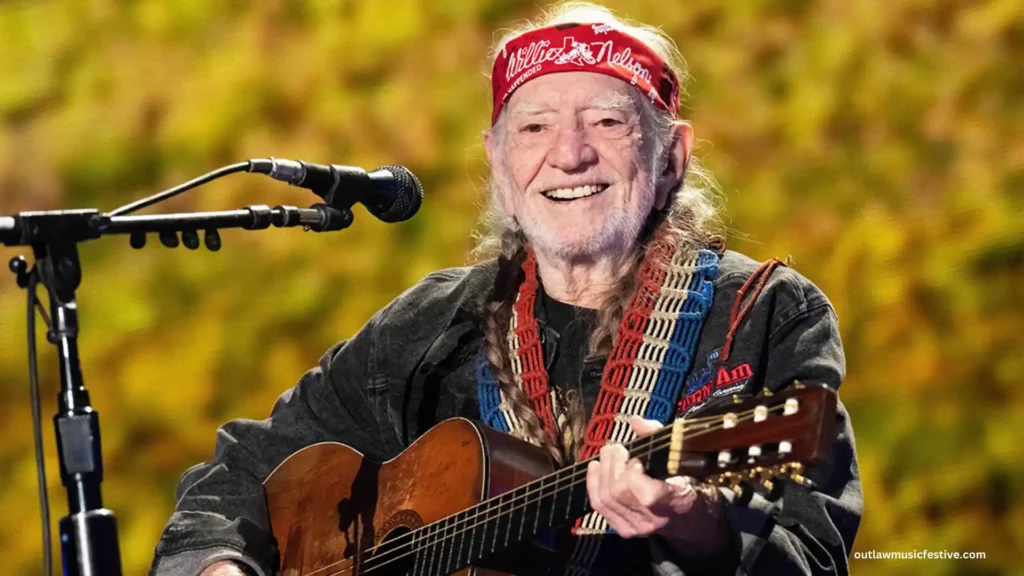
That emotional visibility is part of why the song resurfaces culturally every few years. It appears in films, in award-season montages, in TikTok tributes, in quiet Sunday morning playlists. It’s why younger artists—from Lukas Nelson to new Nashville voices—cite it as a template for vulnerable storytelling. And it’s why, heading into the 2026 Grammys cycle, the song feels as relevant as ever: a reminder that music’s longevity isn’t about nostalgia but resonance.
Willie’s health remains a subject of respectful curiosity among fans, but the truth is simple: he’s present. He’s selective with his schedule, protective of his energy, and intentional about what songs he brings forward. But the spark is still there. Anyone who saw him on the 2025 Outlaw Music Festival run can tell you he still finds moments of joy in the unexpected—banter from the band, a stray breeze sweeping across an outdoor stage, a guitar line that hits just right. His longevity isn’t a medical marvel. It’s an emotional one.
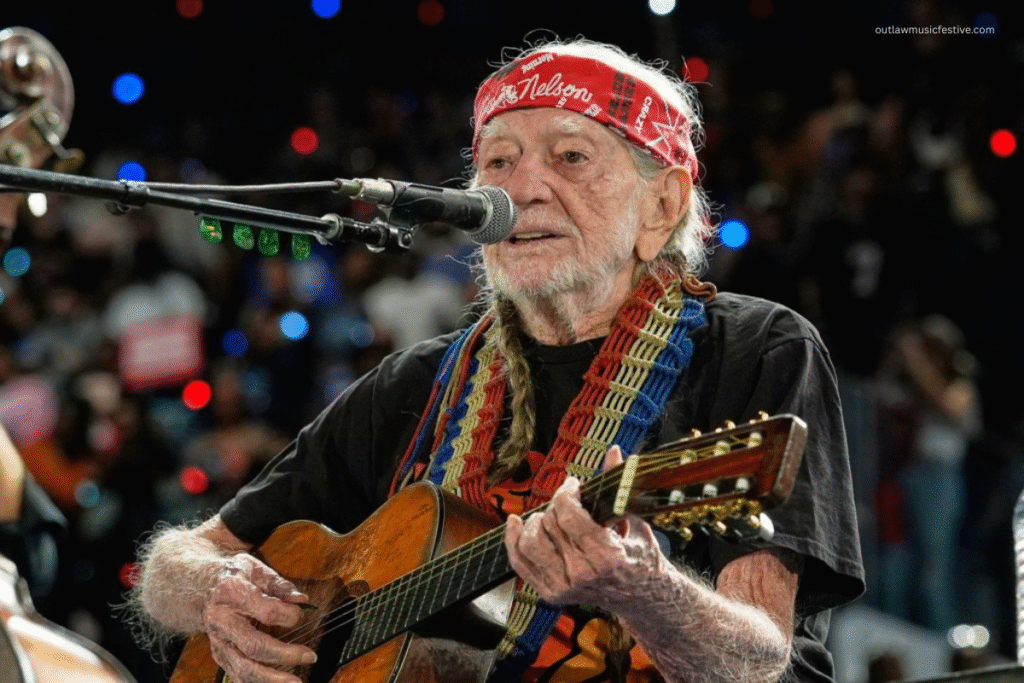
Which brings everything back to the image of Willie, 92 years old, quietly admitting that “Always On My Mind” still makes him cry. Not because he’s fragile. Not because he’s sentimental. But because the song carries the kind of truth that grows heavier with wisdom. It charts the distance between intention and action, between love felt and love shown. That distance becomes clearer with age.
For the fans who’ve followed him across decades—or for the ones who just discovered him through a livestreamed Outlaw set—that vulnerability is the heartbeat of his legacy. Willie Nelson remains a titan of American songwriting not because he has all the answers, but because he keeps searching for them in plain sight. And “Always On My Mind,” with its quiet ache and enduring simplicity, is the song where that search feels most human.
At 92, Willie is still teaching us something essential: that music isn’t a monument to the past but a living conversation with who we are now. And as long as he’s willing to sing it, “Always On My Mind” will continue to be one of the rare American songs that doesn’t just survive time—it deepens it.