
Bob Dylan Reflects on Willie Nelson’s Myth, Humanity, Legacy
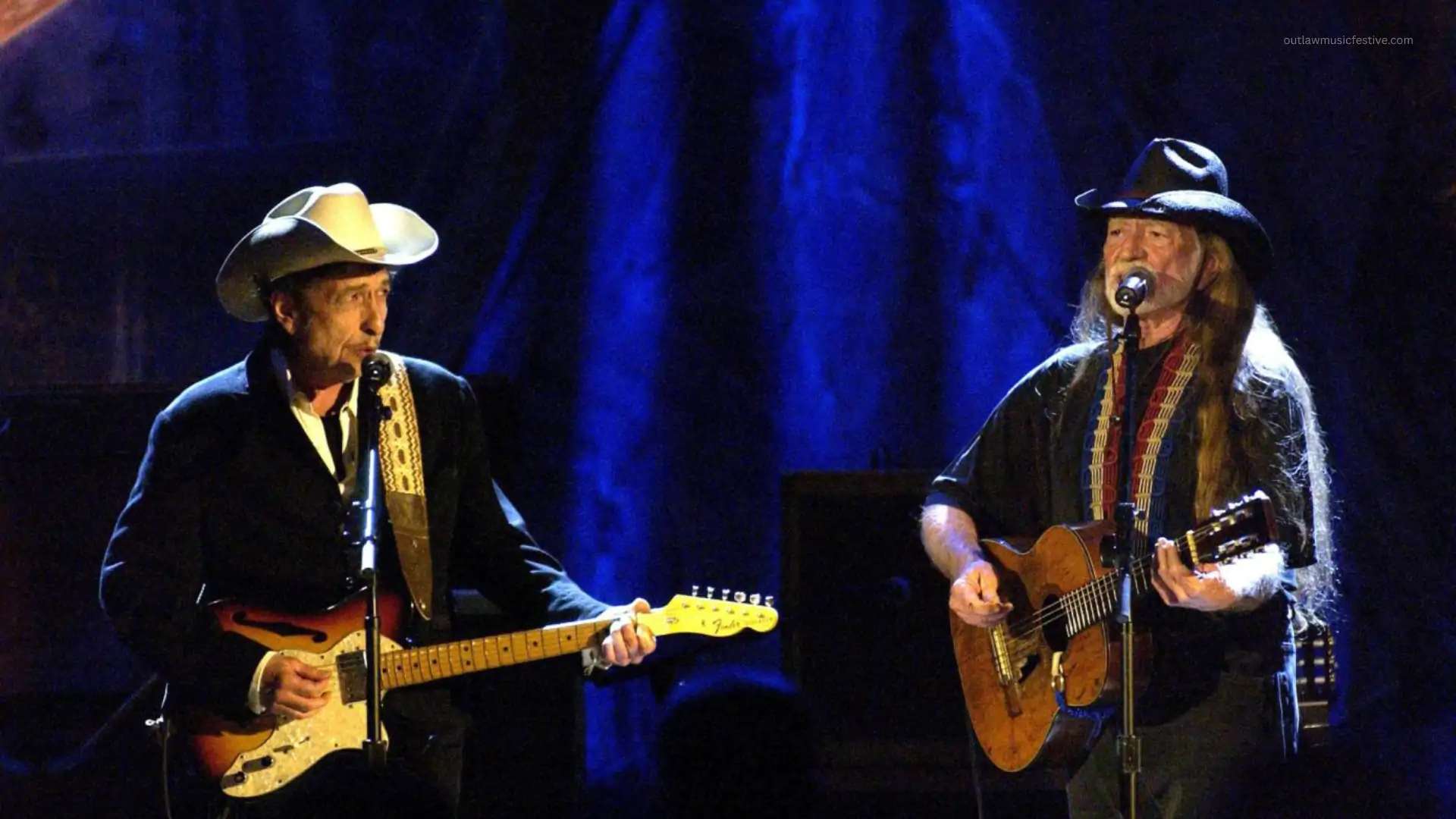
Willie Nelson & Bob Dylan
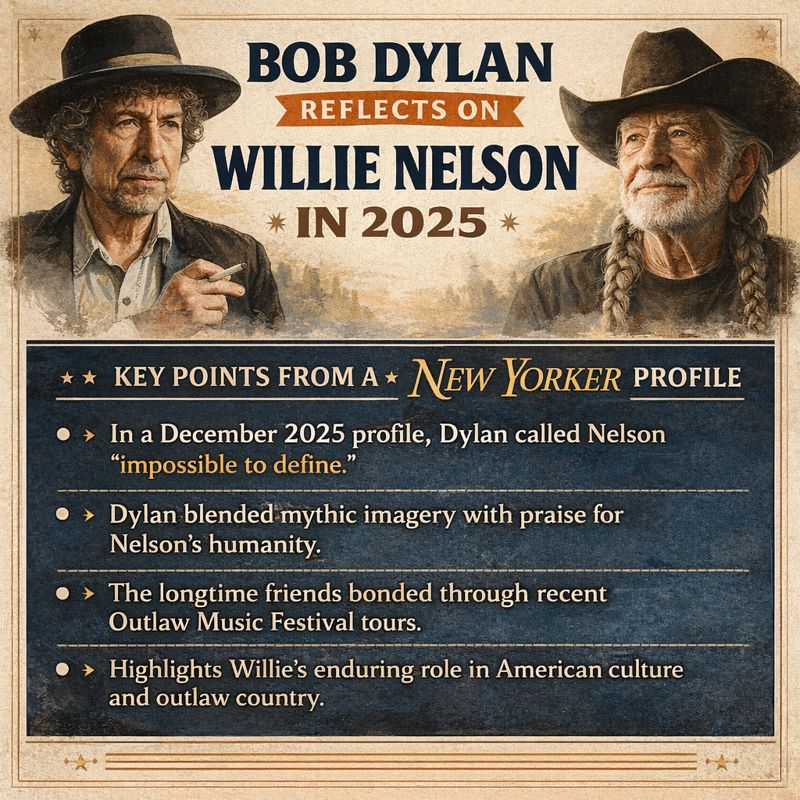
- Bob Dylan reflected on Willie Nelson in a December 2025 New Yorker profile.
- Dylan called the 92-year-old icon impossible to define, blending myth with humanity.
- Their bond deepened through recent Outlaw Music Festival touring together.
- The moment highlights Willie’s lasting role in American music and culture today.
Some artists are easy to praise. Fewer are easy to explain. And almost none defy language the way Willie Nelson does, even now, at 92.
That tension—between legend and humanity—sits at the heart of why a recent profile of Nelson sparked so much attention. It wasn’t just the subject that captured readers. It was the voice chosen to describe him. When Bob Dylan was asked to put Willie into words for a December 2025 New Yorker profile, he didn’t respond with a tidy summation. He hesitated. He circled. He admitted, almost immediately, that the task itself might be impossible.
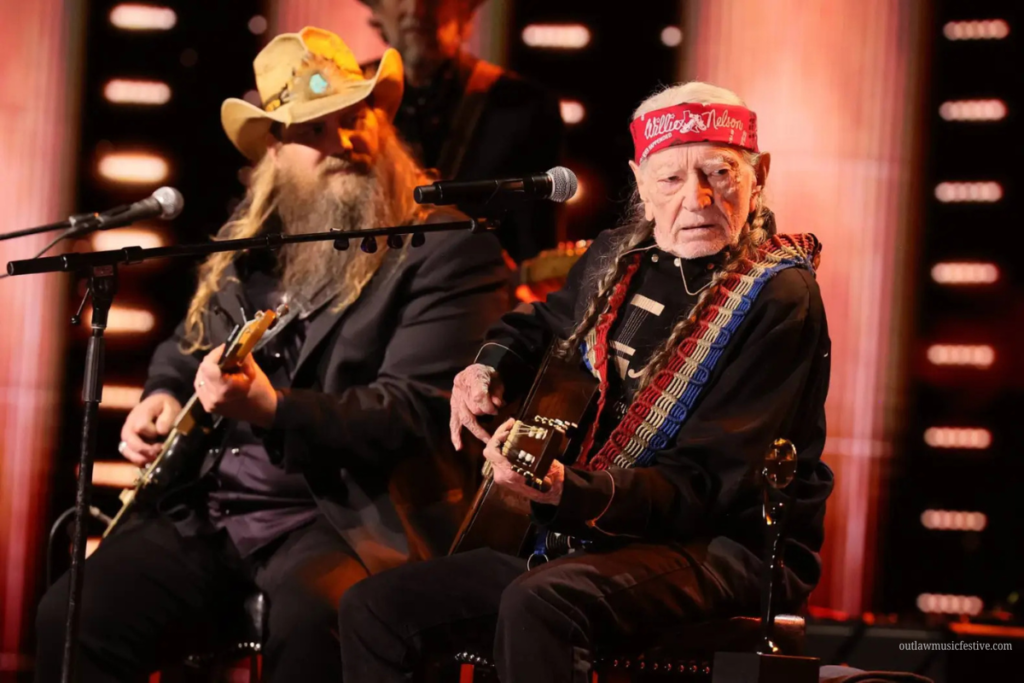
That admission alone explains why the moment resonated. Dylan is not a casual observer, nor a distant admirer. He is one of the few living artists who shares Willie Nelson’s cultural altitude—someone who understands what it means to outlive trends, movements, and even one’s own mythology. When Dylan speaks about Willie, it isn’t commentary. It’s testimony.
The profile itself arrived at a moment when Nelson’s presence feels especially profound. He remains active, visible, and creatively engaged at an age when most artists have long since receded into archival reverence. His touring schedule has slowed, but not stopped. His recording output continues. And his role as the spiritual anchor of the Outlaw Music Festival Tour has only grown more symbolic as younger generations gather around the stages he helped imagine.
Dylan’s contribution to the profile avoided biography and chronology. Instead, he reached for metaphor—layered, unruly, almost mythic language that felt closer to poetry than analysis. He offered descriptions that sounded less like definitions and more like incantations, as if Willie existed somewhere between American folklore and lived experience.
Yet what made Dylan’s words linger wasn’t the imagery itself. It was what followed.
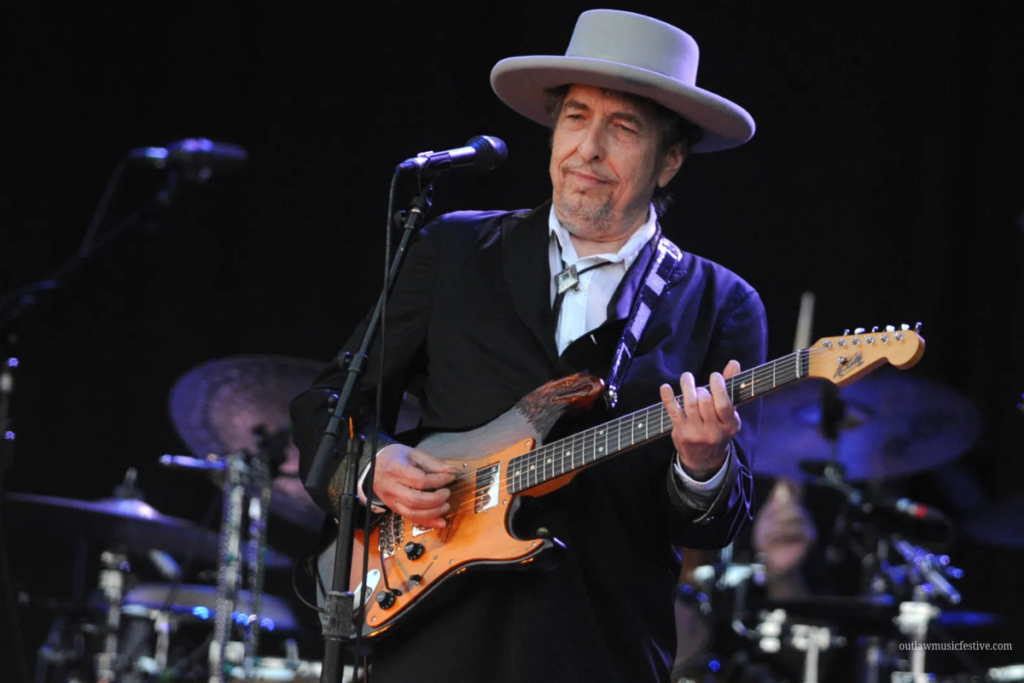
After sketching Nelson as something vast and ungraspable, Dylan pulled the lens inward. He spoke of kindness. Of generosity. Of tolerance for human weakness. He framed Willie not as a monument, but as a presence—steady, forgiving, elemental. Someone who doesn’t impose meaning, but allows others to find it.
That shift matters. In an era obsessed with legacy framing and historical verdicts, Dylan resisted the temptation to freeze Willie Nelson into symbolism. Instead, he emphasized character. It’s a reminder that longevity in American music isn’t sustained by output alone. It’s sustained by how an artist moves through the world, how they treat collaborators, how they hold space for others.
The timing of this reflection is no accident. Dylan and Nelson have spent recent years sharing stages again, most visibly through the Outlaw Music Festival. Their joint appearances are not nostalgia tours. They function more like living dialogues—two artists who shaped the modern idea of American songwriting, now revisiting that terrain together without explanation or apology.
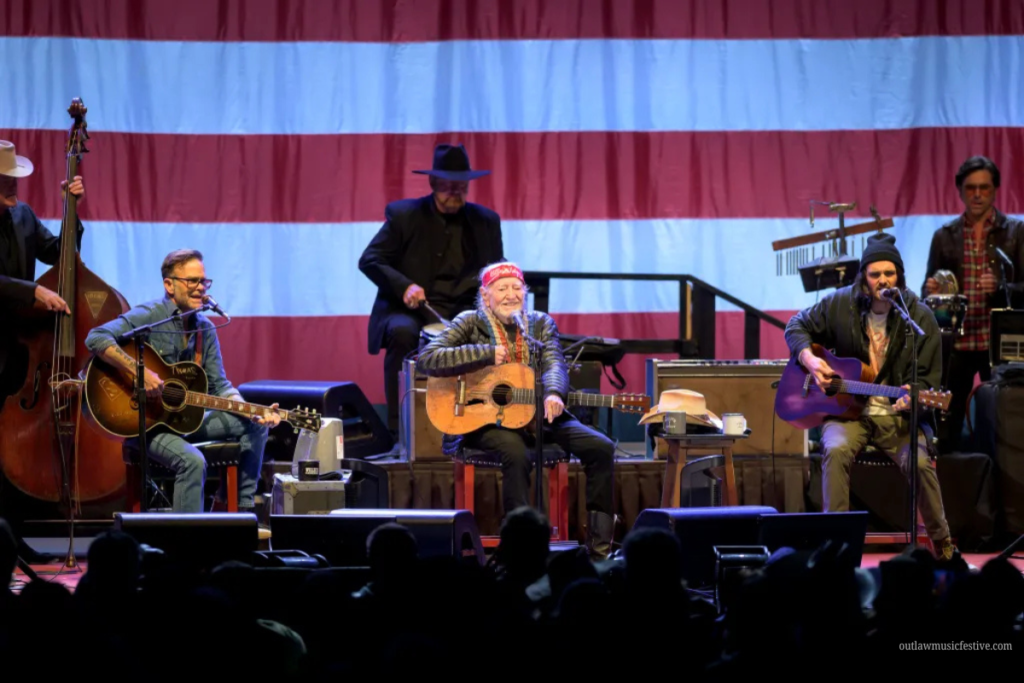
For audiences, especially younger ones encountering Willie Nelson for the first time through these shows, the effect can be disarming. He doesn’t perform like a relic. He performs like someone still curious. Still listening. Still willing to let silence do part of the work. Dylan’s words help articulate why that matters: Willie doesn’t demand interpretation. He invites it.
That invitation feels particularly resonant in 2025. The cultural moment is restless, polarized, and impatient. There is a growing hunger for figures who embody steadiness rather than spectacle. Willie Nelson has become one of those figures—not because he seeks that role, but because time has placed him there.
His recent album, Oh What a Beautiful World, released just before his 92nd birthday, didn’t arrive as a grand statement. It arrived quietly, like many of his later works. But its reception underscored something important: listeners are no longer measuring Willie against his past. They’re meeting him where he is now.
Dylan’s reflections acknowledge that shift. He doesn’t speak about Willie as a chapter that has closed. He speaks about him as an atmosphere—something ongoing, something felt rather than cataloged. That framing aligns with how Nelson now exists in the public imagination: less a performer chasing relevance, more a constant presence reminding people what relevance actually looks like when stripped of ambition.
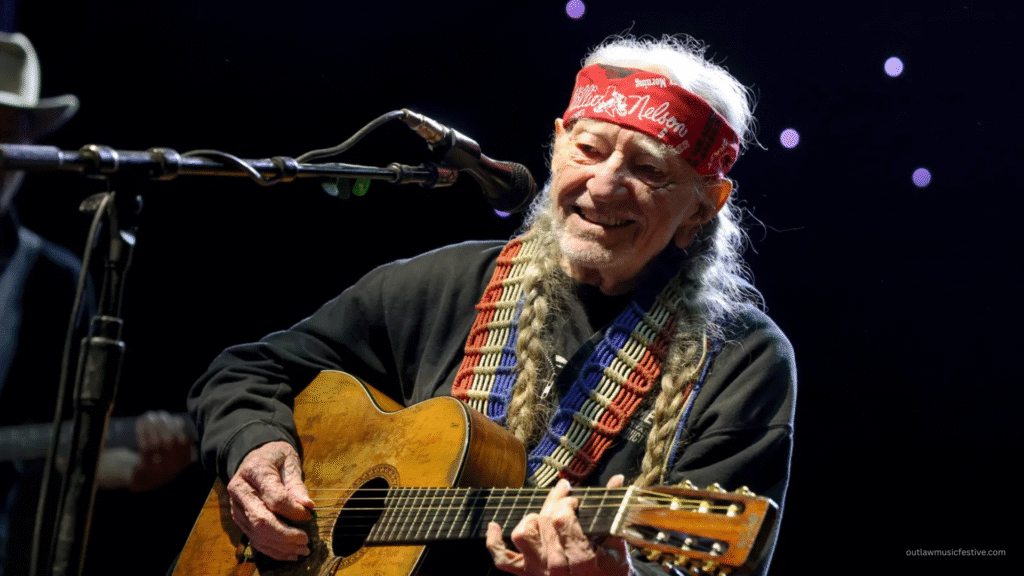
There is also something revealing in Dylan’s focus on Willie’s relationship with his guitar. It’s not about technique or sound. It’s about loyalty. About companionship. About the idea that music, at its core, is a relationship sustained over time. In that image, Willie isn’t a virtuoso displaying mastery. He’s a caretaker honoring continuity.
This perspective reframes the Outlaw Music Festival itself. What began as a touring concept has evolved into something closer to a communal archive—a moving space where different generations encounter the same songs through different lives. Willie remains its gravitational center not because he headlines, but because he embodies the values it quietly promotes: freedom, humility, endurance.
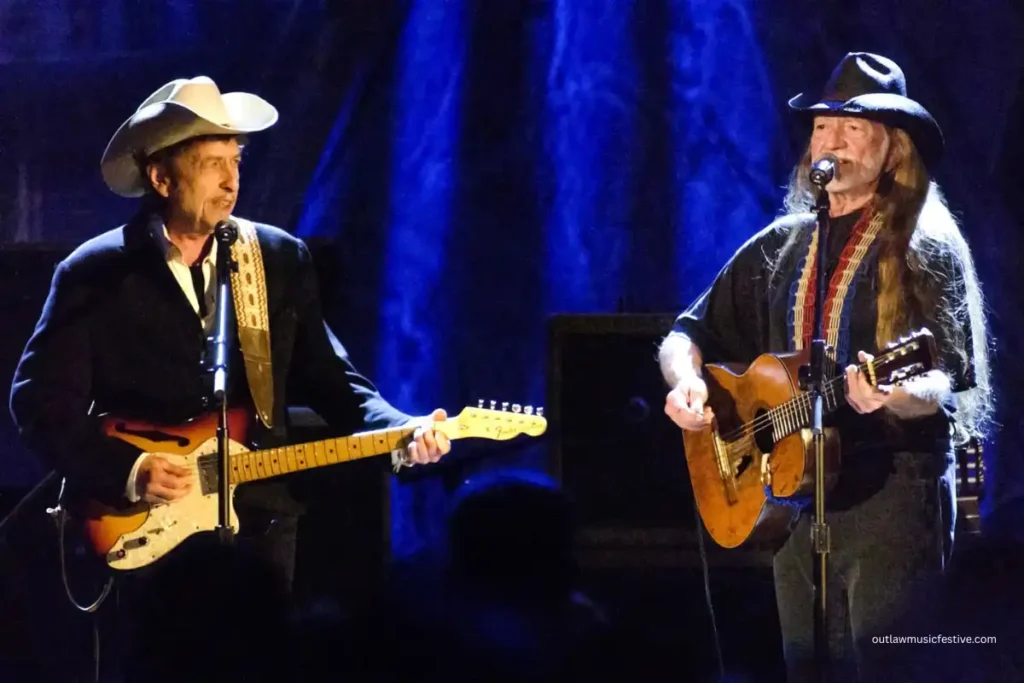
Dylan’s words land with authority because they are not performative praise. They are recognition from someone who understands the cost of remaining oneself across decades. In acknowledging Willie’s gentleness, Dylan is also acknowledging a form of strength that rarely gets celebrated in rock mythology.
As the coverage spread across music press and social feeds, much of the conversation focused on the vivid phrases. But the deeper impact lies elsewhere. Dylan wasn’t trying to define Willie Nelson. He was explaining why definition fails.
That failure is the point.
Willie Nelson has become one of those rare American figures who no longer needs interpretation to justify his place. He exists beyond argument. Beyond fashion. Beyond era. Dylan’s contribution didn’t elevate Willie. It clarified why elevation was never necessary.
At a time when culture moves quickly and forgets easily, the idea of an artist who remains “in harmony with nature,” as Dylan suggested, feels almost radical. Willie’s legacy isn’t just in his songs or his records. It’s in the permission he gives others to age honestly, to create without urgency, and to remain human in a system that often rewards the opposite.
That may be the most enduring truth Dylan offered—not in metaphor, but in spirit. Willie Nelson doesn’t need to be summed up. He needs to be experienced. And, remarkably, he still is.